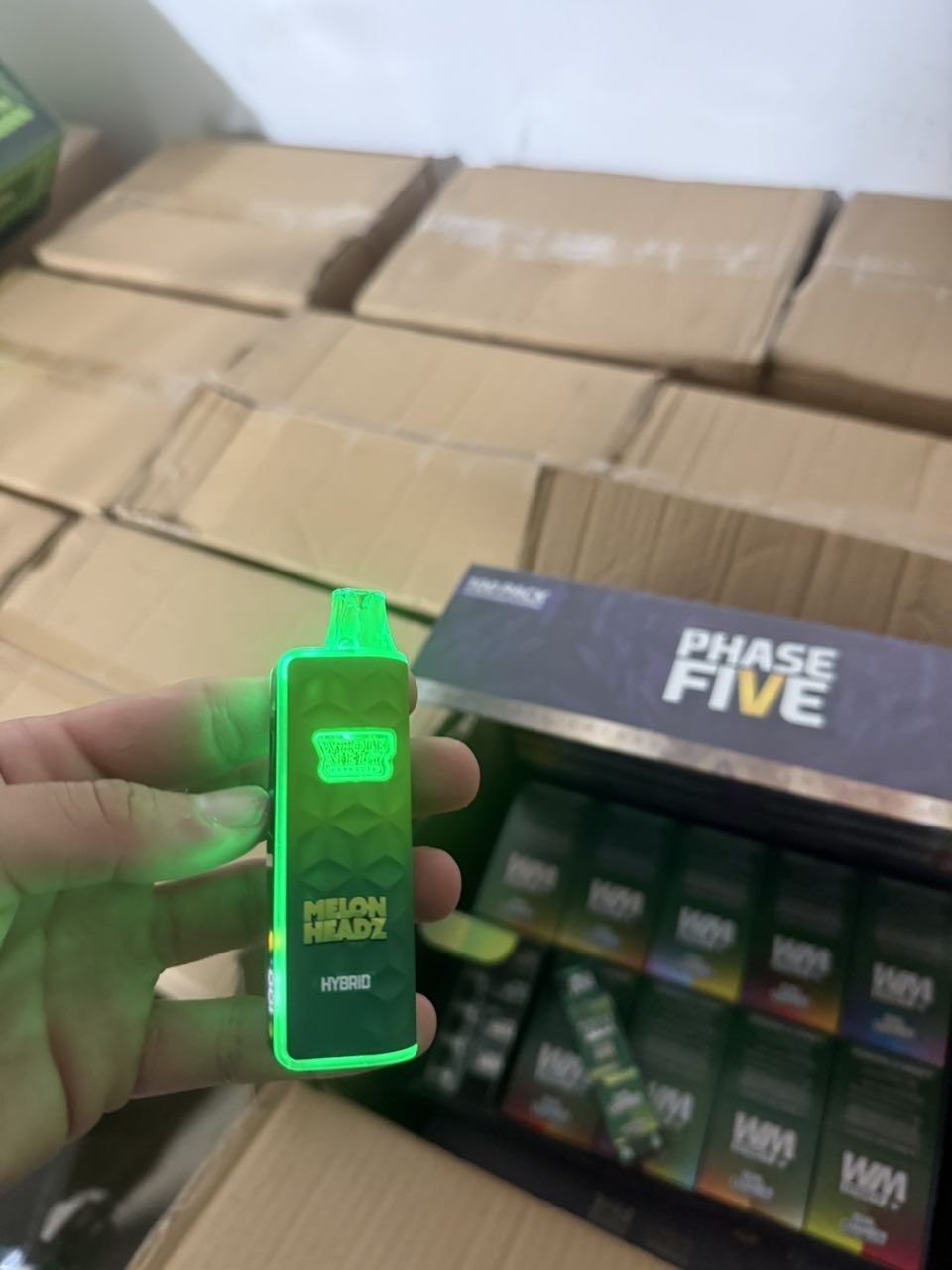



Whole Melt Phase Five Dual Chamber 2G Disposable Advanced Innovation in Portable Design
Introduction to a New Generation of Dual-Chamber Devices
The Whole Melt Phase Five Dual Chamber 2G Disposable represents a refined evolution in modern disposable device engineering, where design precision and structural innovation are emphasized. Moreover, this device is positioned within a growing category of advanced dual-chamber systems that prioritize separation, consistency, and streamlined functionality.
From a structural standpoint, the device has been developed to accommodate two distinct internal chambers, which are independently housed within a single compact body. Consequently, a more controlled internal arrangement is achieved, and product integrity is maintained across both chambers. In addition, the compact 2-gram capacity is distributed in a balanced configuration that supports efficiency in material utilization.
Furthermore, the Phase Five series reflects an iteration-based development approach, where each phase introduces refinements in both hardware stability and internal airflow architecture. As a result, the device is recognized for its upgraded internal consistency and improved structural reliability compared to earlier conceptual models.
Dual Chamber Architecture and Internal Separation System
One of the most defining characteristics of this device is its dual chamber configuration. Unlike single-reservoir structures, the internal system has been divided into two separate compartments. Therefore, each chamber operates independently while remaining integrated within a unified housing shell.
Moreover, this separation has been engineered to preserve distinct internal environments. Each chamber is isolated through structural barriers, and thus cross-interaction is minimized. Consequently, consistency across both sections is better maintained over time.
In addition, airflow channels have been aligned in a parallel configuration to ensure that each chamber follows an independent pathway. As a result, internal balance is maintained throughout the device lifecycle.
Meanwhile, the compact engineering allows both chambers to remain synchronized within a single activation system. However, operational independence is preserved at the structural level, which enhances internal efficiency.
Furthermore, the dual chamber system is often associated with enhanced flexibility in internal composition design. Therefore, multiple profiles can be housed within one device without structural compromise.
Phase Five Engineering Development and Design Refinement
The “Phase Five” designation refers to a progressive refinement stage within the development cycle. At this stage, multiple improvements have been introduced across material stability, airflow design, and internal heat distribution architecture.
Moreover, the housing shell has been reinforced through a layered structural approach. As a result, external durability is enhanced while maintaining a lightweight form factor. Additionally, the surface finish has been refined for improved tactile uniformity and aesthetic consistency.
In earlier design phases, minor inconsistencies in airflow regulation were observed. However, these inconsistencies have been addressed through redesigned channel calibration. Consequently, internal distribution is now more stable and predictable.
Furthermore, heat dispersion efficiency has been optimized through internal spacing adjustments. Therefore, thermal buildup is managed more evenly across operational cycles.
Notably, Phase Five engineering emphasizes controlled internal separation while preserving a unified external profile. As a result, the device maintains a minimalistic and compact visual identity despite its dual-chamber complexity.
Compact 2G Capacity Distribution and Structural Efficiency
The device features a 2-gram total capacity, distributed evenly between two internal chambers. Moreover, this distribution allows for balanced internal storage architecture without overloading a single compartment.
In addition, the compact nature of the 2G format ensures portability while preserving structural integrity. Consequently, the device remains lightweight and easily integrated into small form-factor design categories.
Furthermore, internal containment systems have been reinforced to reduce the likelihood of material migration between chambers. As a result, each section retains its own structural identity.
Meanwhile, the distribution system has been engineered to maintain equilibrium across both chambers. Therefore, operational consistency is improved throughout usage cycles.
Additionally, the compact capacity is aligned with modern disposable design standards, where efficiency and minimalism are prioritized simultaneously.
Airflow System Optimization and Internal Flow Dynamics
The airflow system within the Phase Five dual chamber structure has been carefully refined. Moreover, independent air channels have been constructed for each chamber, ensuring isolated flow behavior.
Consequently, airflow consistency is maintained without cross-interference between internal sections. In addition, pressure distribution has been stabilized through regulated channel geometry.
Furthermore, internal pathways have been calibrated to reduce resistance fluctuations. As a result, smoother operational consistency is achieved across both chambers.
Meanwhile, airflow entry points have been positioned strategically within the structural frame. Therefore, distribution efficiency is enhanced while maintaining compact design constraints.
Notably, the system has been engineered to reduce turbulence within internal pathways. Consequently, smoother internal movement is maintained throughout operation.
Material Composition and Structural Integrity
The external shell of the device has been constructed using reinforced composite materials designed for durability and lightweight performance. Moreover, the surface has been treated for resistance against minor impact stress and environmental wear.
In addition, internal components have been stabilized using heat-resistant structural frameworks. As a result, internal degradation is reduced over extended periods.
Furthermore, material layering has been applied to improve rigidity without increasing overall bulk. Therefore, the device maintains a balanced structural profile.
Meanwhile, assembly precision has been improved through refined manufacturing tolerances. Consequently, internal alignment remains consistent across production units.
Additionally, sealing integrity has been enhanced to reduce internal exposure to external factors. As a result, chamber isolation is preserved more effectively.
Design Aesthetics and Ergonomic Structure
The aesthetic design of the Whole Melt Phase Five Dual Chamber 2G Disposable reflects a modern minimalist approach. Moreover, smooth contours and streamlined edges contribute to a refined visual identity.
In addition, ergonomic shaping has been integrated into the overall structure to support comfortable handling. Consequently, the device maintains ease of use in various positions and orientations.
Furthermore, surface finishing has been applied with attention to texture balance and visual clarity. As a result, the external appearance remains clean and consistent.
Meanwhile, branding elements are integrated subtly within the surface structure. Therefore, visual identity is maintained without overwhelming the design.
Additionally, the compact form factor ensures portability while preserving structural sophistication.
Functional Consistency and System Stability
Operational stability has been prioritized throughout the Phase Five development cycle. Moreover, internal synchronization between chambers has been improved through refined engineering adjustments.
Consequently, system behavior remains consistent across extended operational periods. In addition, internal regulation systems have been optimized for balance.
Furthermore, calibration techniques have been applied to maintain uniform performance across both chambers. As a result, variability is reduced significantly.
Meanwhile, structural reinforcement contributes to overall system reliability. Therefore, mechanical consistency is preserved even under repeated use cycles.
Additionally, performance balance between chambers is maintained through isolated yet synchronized system architecture.
Technological Advancements in Phase Five Design
The Phase Five iteration introduces several incremental technological improvements. Moreover, internal calibration systems have been upgraded for more precise control of structural behavior.
In addition, airflow stabilization technology has been integrated into the chamber system. Consequently, distribution consistency is improved across both internal sections.
Furthermore, material optimization techniques have been applied to reduce unnecessary structural weight. As a result, the device remains compact without sacrificing durability.
Meanwhile, internal spacing architecture has been refined to improve thermal and mechanical balance. Therefore, system efficiency is enhanced overall.
Additionally, iterative design improvements have been applied based on previous structural evaluations.
Reliability and Quality Control Framework
Quality assurance processes have been implemented throughout the production cycle. Moreover, each unit is subjected to multi-stage structural evaluation to ensure consistency.
In addition, internal alignment verification is performed to confirm chamber separation integrity. Consequently, cross-interference risks are minimized.
Furthermore, sealing and enclosure standards are applied uniformly across all units. As a result, structural reliability is maintained at a consistent level.
Meanwhile, performance consistency is evaluated through controlled testing procedures. Therefore, uniform output standards are reinforced.
Additionally, manufacturing precision is maintained through regulated assembly protocols.
User-Oriented Design Philosophy
Although highly technical in structure, the device has been developed with a user-centered design philosophy. Moreover, simplicity in external interaction is prioritized.
In addition, complexity remains contained within internal systems, while the exterior remains minimalistic. Consequently, the device maintains an accessible physical interface.
Furthermore, design choices have been aligned with portability and convenience principles. As a result, compact usability is preserved.
Meanwhile, structural balance ensures that the device remains stable during handling. Therefore, ergonomic reliability is reinforced.
Additionally, visual simplicity supports a streamlined product identity.
Market Position and Product Category Placement
The Whole Melt Phase Five Dual Chamber 2G Disposable is positioned within an advanced segment of disposable device design. Moreover, it belongs to a category focused on structural innovation and internal system separation.
In addition, dual chamber systems are increasingly recognized for their architectural complexity. Consequently, this model aligns with modern engineering trends in compact device design.
Furthermore, iterative phase-based development places the product within a progressive innovation framework. As a result, it reflects ongoing refinement rather than static design.
Meanwhile, compact 2G systems remain widely used due to their balance of portability and capacity. Therefore, this product fits within established usage categories.
Additionally, dual chamber systems continue to expand in design experimentation spaces.
A Refined Balance of Structure and Innovation
The Whole Melt Phase Five Dual Chamber 2G Disposable represents a structured advancement in compact dual-system design. Moreover, its internal architecture reflects careful separation, refined airflow control, and improved material stability.
In addition, Phase Five engineering introduces meaningful refinements that enhance both structural consistency and design reliability. Consequently, the device maintains a balanced integration of innovation and practicality.
Furthermore, dual chamber isolation, combined with compact 2G distribution, creates a system that emphasizes internal organization and external simplicity. As a result, the overall design achieves a coherent balance between complexity and minimalism.
Ultimately, the evolution of this product reflects continuous development within modern disposable architecture systems, where precision, refinement, and structural efficiency remain central priorities.
Extended Product Experience and Structural Depth
Continuing from the foundational design and engineering principles, the Whole Melt Phase Five Dual Chamber 2G Disposable further reveals its complexity through deeper refinement layers that are not immediately visible from the exterior. Moreover, these internal enhancements contribute significantly to its overall structural identity and long-term consistency.
In addition, the device demonstrates how incremental engineering improvements can reshape user expectations within compact dual-chamber systems. As a result, Phase Five is not merely a cosmetic upgrade but rather a structural recalibration of internal logic and material behavior.
Furthermore, the integration of dual systems within a single compact housing reflects a broader trend in modern micro-engineering, where efficiency and separation must coexist without compromising form factor integrity.
Internal Thermal Regulation and Stability Control
Thermal management plays a crucial role in maintaining structural stability across both chambers. Moreover, the Phase Five system incorporates distributed heat control zones that reduce localized stress accumulation.
Consequently, internal temperature variation is minimized during extended operational cycles. In addition, heat dispersion pathways have been structured in a way that promotes gradual and balanced release across the device body.
Furthermore, micro-channel spacing within the internal architecture allows thermal energy to dissipate more evenly. As a result, material integrity is preserved over longer periods of consistent use.
Meanwhile, insulation layers have been strategically positioned between chambers. Therefore, thermal transfer between compartments is significantly reduced, ensuring isolated stability.
Additionally, controlled heat regulation contributes to overall system longevity by reducing internal fatigue points.
Precision Engineering and Micro-Alignment Systems
The internal construction of the Phase Five model relies heavily on micro-alignment precision. Moreover, each internal component is positioned with calibrated tolerances that support consistent structural symmetry.
In addition, chamber alignment systems have been refined to reduce internal displacement during use. Consequently, both compartments maintain stable positioning within the housing frame.
Furthermore, mechanical synchronization ensures that internal components respond uniformly under activation conditions. As a result, system behavior remains predictable and stable.
Meanwhile, assembly precision is maintained through automated calibration processes that minimize deviation. Therefore, structural consistency is reinforced at scale.
Additionally, micro-adjustments in internal spacing contribute to smoother operational flow across both chambers.
Material Optimization and Structural Evolution
Material selection within Phase Five reflects a deliberate shift toward enhanced resilience and reduced structural strain. Moreover, composite layering techniques are used to balance flexibility with rigidity.
Consequently, external pressure resistance is improved without compromising lightweight design principles. In addition, internal supports have been reinforced to reduce deformation risks.
Furthermore, surface treatments enhance durability while maintaining a smooth and uniform texture. As a result, the device retains its aesthetic clarity over extended use periods.
Meanwhile, bonding techniques between structural layers have been improved to increase cohesion strength. Therefore, long-term integrity is better preserved under variable conditions.
Additionally, material optimization contributes to a more stable and efficient internal environment overall.
Dual Chamber Synchronization and Functional Independence
Although the chambers operate independently, a synchronized structural framework ensures unified system behavior. Moreover, this balance between independence and coordination is a defining feature of the Phase Five design.
In addition, internal regulation mechanisms prevent overlap between chamber operations. Consequently, each section maintains its own controlled environment.
Furthermore, synchronization logic ensures that both chambers respond evenly under system activation. As a result, performance balance is maintained across the device.
Meanwhile, isolation barriers continue to prevent cross-interaction, preserving structural clarity. Therefore, internal consistency is reinforced at all operational levels.
Additionally, this dual system approach allows for parallel functionality within a single compact framework.
Airflow Refinement and Pressure Distribution Balance
Airflow optimization continues to be a central engineering focus within this model. Moreover, pressure distribution systems have been recalibrated to ensure smoother internal flow dynamics.
Consequently, airflow resistance has been reduced across both chambers. In addition, channel geometry has been adjusted to support more stable movement patterns.
Furthermore, internal vents have been aligned to maintain consistent directional flow. As a result, airflow efficiency is improved across operational cycles.
Meanwhile, pressure equalization systems help maintain balance between intake and output zones. Therefore, internal fluctuations are minimized.
Additionally, airflow refinement contributes to a more controlled and predictable internal environment.
Structural Longevity and Wear Resistance Design
Longevity has been addressed through multiple layers of structural reinforcement. Moreover, the Phase Five model incorporates wear-resistant materials designed to withstand repeated use conditions.
In addition, stress distribution frameworks reduce pressure concentration at key structural points. Consequently, degradation is slowed over time.
Furthermore, reinforcement nodes have been embedded within high-impact areas of the device. As a result, structural fatigue is significantly reduced.
Meanwhile, external casing durability ensures resistance to minor environmental exposure. Therefore, the device maintains its integrity in varied conditions.
Additionally, long-term stability is supported by balanced internal load distribution.
User Interaction Efficiency and Functional Simplicity
Despite its internal complexity, the device maintains a simplified external interaction model. Moreover, user-facing design elements remain minimal and intuitive.
In addition, operational flow has been streamlined to reduce unnecessary complexity. Consequently, usability remains accessible and straightforward.
Furthermore, structural design ensures that handling remains natural and balanced. As a result, ergonomic consistency is preserved.
Meanwhile, internal complexity remains hidden from external interaction points. Therefore, the device maintains a clean and simplified user experience.
Additionally, functional clarity supports ease of use without requiring technical awareness.
Quality Assurance Reinforcement and System Validation
Each unit undergoes a multi-stage validation process designed to ensure structural consistency. Moreover, internal calibration checks verify chamber separation integrity.
In addition, airflow consistency testing is conducted to confirm stable internal flow behavior. Consequently, performance uniformity is maintained across production batches.
Furthermore, structural integrity evaluations ensure that material bonds meet required durability thresholds. As a result, reliability standards are consistently upheld.
Meanwhile, system validation includes stress testing under controlled conditions. Therefore, operational stability is reinforced before distribution.
Additionally, quality assurance protocols ensure long-term consistency across all units.
Design Integration and Visual Identity Consistency
Visual design remains tightly integrated with structural engineering principles. Moreover, the external form reflects internal balance and symmetry.
In addition, surface detailing is applied in a way that reinforces the product’s modern aesthetic identity. Consequently, the device maintains a cohesive visual presentation.
Furthermore, branding integration is subtle and structurally aligned with the surface design. As a result, visual elements remain understated yet recognizable.
Meanwhile, proportional balance contributes to a compact and refined appearance. Therefore, the design maintains both elegance and functionality.
Additionally, visual consistency reinforces the product’s premium positioning.
Evolving Role of whole extracts melt phase five dual chamber 2g disposable Technology
Dual chamber systems represent a growing area of innovation within compact device engineering. Moreover, they allow for greater internal flexibility without expanding external size.
In addition, separation-based architecture enhances control over internal composition design. Consequently, structural customization potential is significantly increased.
Furthermore, Phase Five development reflects ongoing experimentation within this category. As a result, future iterations may continue to refine separation efficiency and airflow precision.
Meanwhile, dual chamber frameworks continue to influence modern design standards. Therefore, they remain central to next-generation compact engineering models.
Additionally, this evolution highlights the increasing importance of internal modularity.
Final Reflection on Phase Five Advancement
The extended architecture of the Whole Melt Phase Five Dual Chamber 2G Disposable demonstrates a carefully balanced system of innovation, refinement, and structural discipline. Moreover, its dual chamber separation, airflow optimization, and material reinforcement work together to form a cohesive engineering identity.
In addition, the Phase Five designation reflects a stage of maturity in design evolution where stability and refinement take priority over radical change. Consequently, the product emphasizes controlled improvement rather than disruptive redesign.
Furthermore, internal precision systems, thermal balance, and structural reinforcement collectively define its operational consistency. As a result, the device stands as a representative model of modern compact dual-system engineering.
Ultimately, the integration of separation technology, optimized airflow, and refined material construction highlights a sophisticated approach to portable structural design—one that continues to evolve through iterative innovation and engineering discipline.




Reviews
There are no reviews yet.